

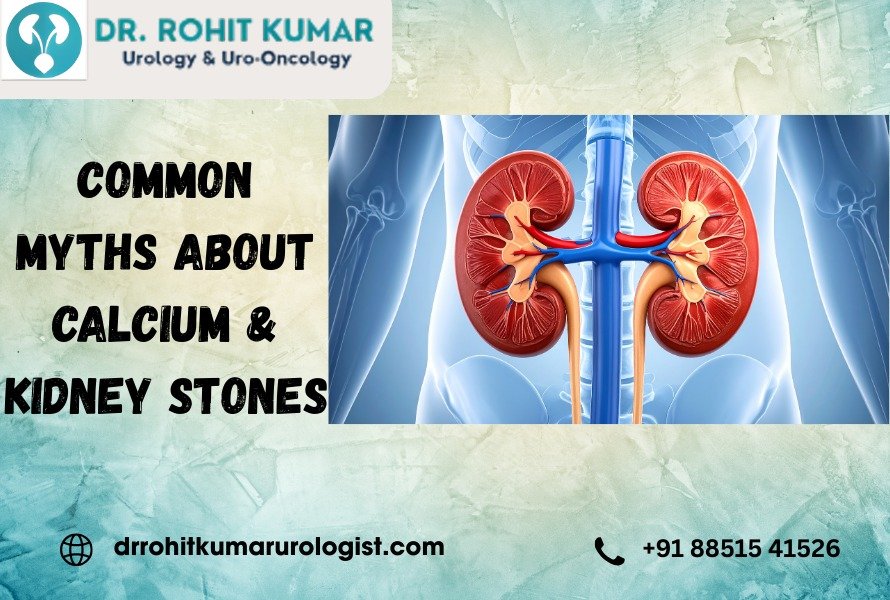
Common Myths About Calcium & Kidney Stones
Kidney stones are one of the most common urological conditions affecting adults and even younger individuals today. Among the many misconceptions surrounding kidney stones, the biggest confusion lies in understanding the role of calcium. Many people believe calcium is the main culprit behind stone formation and therefore try to avoid calcium-rich foods. However, this is not always true.
As the Best Urologist in Noida, Dr. Rohit Kumar frequently treats patients who follow incorrect dietary restrictions due to misinformation. Understanding the facts can help you prevent kidney stones more effectively and maintain better urinary health.
This blog aims to clarify the most common myths about calcium and kidney stones, backed by scientific evidence and clinical experience.
Myth 1: Calcium Causes Kidney Stones
This is the most common misconception.
Many people assume that since calcium oxalate is the most common type of kidney stones, calcium itself must be the cause. But in reality:
Fact:
Dietary calcium does not cause kidney stones in most cases. In fact, eating the right amount of calcium helps prevent stone formation.
When consumed through food, calcium binds with oxalate in the intestine, preventing oxalate from reaching the kidneys. Low calcium intake increases the risk of oxalate absorption, which directly increases kidney stone formation.
As the Best Urologist in Noida, Dr. Rohit Kumar advises patients to never eliminate calcium from their diet without medical guidance.
Myth 2: You Should Avoid Calcium-Rich Foods Completely
Many patients stop consuming dairy products such as milk, curd, paneer, and cheese after being diagnosed with kidney stones.
Fact:
Eliminating calcium-rich foods can weaken your bones, reduce bone mineral density, and increase the risk of fractures.
Instead:
● Consume moderate amounts of calcium
● Always balance calcium intake with adequate hydration
● Take calcium from natural foods, not supplements (unless prescribed)
A balanced diet is always recommended by the Best Urologist in Noida for maintaining both kidney and bone health.
Myth 3: Calcium Supplements Are Safe for Everyone
While calcium from food is safe,supplements are a different case.
Fact:
Calcium supplements can increase the risk of kidney stones in certain individuals, especially when taken without proper medical guidance.
This happens because supplements may cause excess calcium to reach the kidneys, increasing urine calcium levels.
If you need supplements, consult the Best Urologist in Noida to ensure the right dosage and timing.
Myth 4: Only Calcium Stones Exist
Many believe all kidney stones are made of calcium.
Fact:
Although calcium oxalate and calcium phosphate stones are common, other types such as uric acid stones, struvite stones, and cystine stones also exist.
Identifying the stone type is important because treatment and prevention vary.
Dr. Rohit Kumar, known as the Best Urologist in Noida, uses advanced diagnostic tools to determine stone composition and create personalized treatment plans.
Myth 5: Drinking Less Water Has Nothing to Do With Stones
People often underestimate the importance of hydration.
Fact:
Low water intake is one of the leading causes of kidney stone formation.
When you don’t drink enough water, urine becomes concentrated, allowing minerals like calcium and oxalate to crystallize into stones.
Doctors recommend:
● At least 2.5–3 liters of water per day
● More fluids during hot weather or heavy activity
Good hydration, emphasized by the Best Urologist in Noida, is one of the simplest ways to prevent kidney stones.
Conclusion
Understanding the truth about calcium and kidney stones is essential for proper prevention and treatment. Calcium is not the enemy—in fact, avoiding calcium can sometimes worsen stone risk. Instead, maintaining a balanced diet, staying hydrated, and following medical guidance are key to reducing your chances of stone recurrence.
If you experience symptoms like severe flank pain, burning urination, nausea, or blood in urine, seek timely evaluation.
Dr. Rohit Kumar, widely trusted as the Best Urologist in Noida, offers advanced care, correct diagnosis, and personalized treatment for all types of kidney stones.
FAQs
1. Does eating calcium cause kidney stones?
No. Dietary calcium actually helps reduce the risk of stones by binding to oxalate.
2. Should I stop milk and dairy if I have stones?
No. You should consume moderate calcium-rich foods unless advised otherwise.
3. Are calcium supplements safe?
Supplements may increase stone risk in some people. Consult a urologist before taking them.
4. What is the best way to prevent kidney stones?
Drink enough water, limit salt and oxalate-rich foods, and maintain a balanced diet.
5. Who is the right doctor for kidney stone treatment?
Consult Dr. Rohit Kumar, the Best Urologist in Noida, for expert diagnosis and treatment.
Recent Posts
.png)
Everything You Need to Know About Urinary Tract Infections (UTIs)
Urinary Tract Infections, or UTIs, are very common and can affect anyone, though they are more common in women...
Eat Well, Live Well: How Diet Can Help Prevent Kidney Failure
Your kidneys play a vital role in keeping your body healthy. They filter waste, balance fluids, and help contr...
Can You Prevent Bladder Cancer? Lifestyle and Diet Tips
Bladder cancer is a serious condition that affects many people, especially as they get older. While there’s ...
Lifestyle Changes to Support Recovery After Urethral Stricture Treatment – Best Urologist in Noida
Learn essential lifestyle changes to aid recovery after urethral stricture treatment. Tips from the best urolo...
What Are 5 Interesting Facts About the Urinary System?
Discover five fascinating facts about the urinary system and learn how your kidneys and bladder work together ...
Fight & Win: Prostate Cancer Treatment Explained
Explore how prostate cancer is diagnosed and treated, the options available, and how early action helps men fi...
Common Myths About Calcium & Kidney Stones
Do calcium-rich foods cause kidney stones? The Best Urologist in Noida debunks common myths and explains how c....png)
Blood in Semen: What Is Hematospermia?
Learn what hematospermia is, why blood appears in semen, common causes, symptoms to watch for, and when to see....png)
Why Are Young People Getting Kidney Stones?
Learn why kidney stones are becoming common in young people, key risk factors, early symptoms, and tips to pre...
Leaking Urine After Delivery? Know Why It Happens & How to Treat It
Leaking urine after delivery is a common postpartum concern many women experience, especially after vaginal ch...
Prostate Health & ED: The Hidden Connection
Learn how prostate health is linked to erectile dysfunction, common causes of ED, and why early care can impro...
Kidney Stones After Surgery: Can They Return?
Can kidney stones return after surgery? Learn the risk factors, warning signs, and prevention tips to reduce r....png)
Only One Type of Kidney Stone Can Dissolve—Here’s Which
Did you know only one type of kidney stone can dissolve? Learn which type it is, how treatment works, and how ...
Can Kidney Stones Dissolve Naturally? Here’s the Truth You Must Know
Wondering if kidney stones can dissolve naturally? Learn the truth about which kidney stones may pass on their...
Struggling with UTI? Advanced Urinary Tract Infection Treatment
Urinary tract infections (UTIs) are common but can be painful and disruptive if not treated properly. From fre....png)
Don’t Ignore Blood in Urine: Know the Warning Signs
Blood in urine is a symptom that should never be ignored, even if it appears only once. It may be caused by ur....png)
Can Lemon Water Prevent Kidney Stones? Here’s the Truth
Lemon water is often recommended as a natural remedy for kidney stone prevention, but how effective is it? Lem....png)
UTIs Treatment Mistakes That Can Make Infection Worse
Urinary tract infections (UTIs) are common, but incorrect treatment can make symptoms worse and lead to recurr....png)
Do Soft Drinks Increase Kidney Stone Risk?
Soft drinks are widely consumed, but frequent intake may increase the risk of kidney stones. High sugar conten....png)
Lithotripsy for Kidney Stones: Faster Recovery, Less Pain
Lithotripsy is a modern, minimally invasive treatment used to break kidney stones into smaller fragments that ....png)
Weak Urine Flow? Your Prostate Might Be Talking
Weak urine flow is a common symptom many men ignore, but it may indicate an underlying prostate issue such as ....png)